Have your prototype made at Superellipse
From sketch to real model.
Fast, smart and ready to test.
A prototype is the fastest way to know if your product works. Not on paper, but for real. At Superellipse Product Lab we build physical, digital and hybrid prototypes in our own workshops in Mechelen and Antwerp.
Ready to have your prototype made?
These 10 questions show you right away where you stand and what you still need for a successful prototype.

What is a prototype?
A prototype is a working or visual version of your product, made before the real production starts. The goal is clear: to test what you cannot see on a drawing. How does it feel in the hand? Does the mechanism work as planned? Is the ergonomics right? Does it fit the way it will be used?
A prototype is not a finished product. It is a tool for making smart choices. And for finding mistakes at a moment when they still cost little.
Prototyping is a fixed part of every serious product development process. For brand new products as well as for improved versions of existing products.
Which type of prototype do you need?
Not every prototype has the same goal. The choice depends on what you want to learn.
Visual prototype
A visual prototype shows what the product looks like: shape, proportions, colour, finish. Ideal for presentations to investors or internal stakeholders. Or to check whether the design fits the brand identity.
Functional prototype
A functional prototype tests whether the product works as intended. It simulates the mechanical, electronic or digital operation. Suitable for user tests and technical validation.
Proof of concept (POC)
A POC shows that a technical concept is feasible. It is not about the final shape, but about one question: does this principle work? Compact, fast and focused on one specific question.
Hybrid prototype
A physical product with a digital interface, a connected device, a phygital product. Superellipse builds prototypes in which hardware and software work together. Industrial design, electronics and digital interfaces in one team.
Virtual prototype
A photorealistic 3D model or an interactive digital simulation. Not a physical object, but still testable visually and functionally. Suitable as a first validation step before you invest in materials.
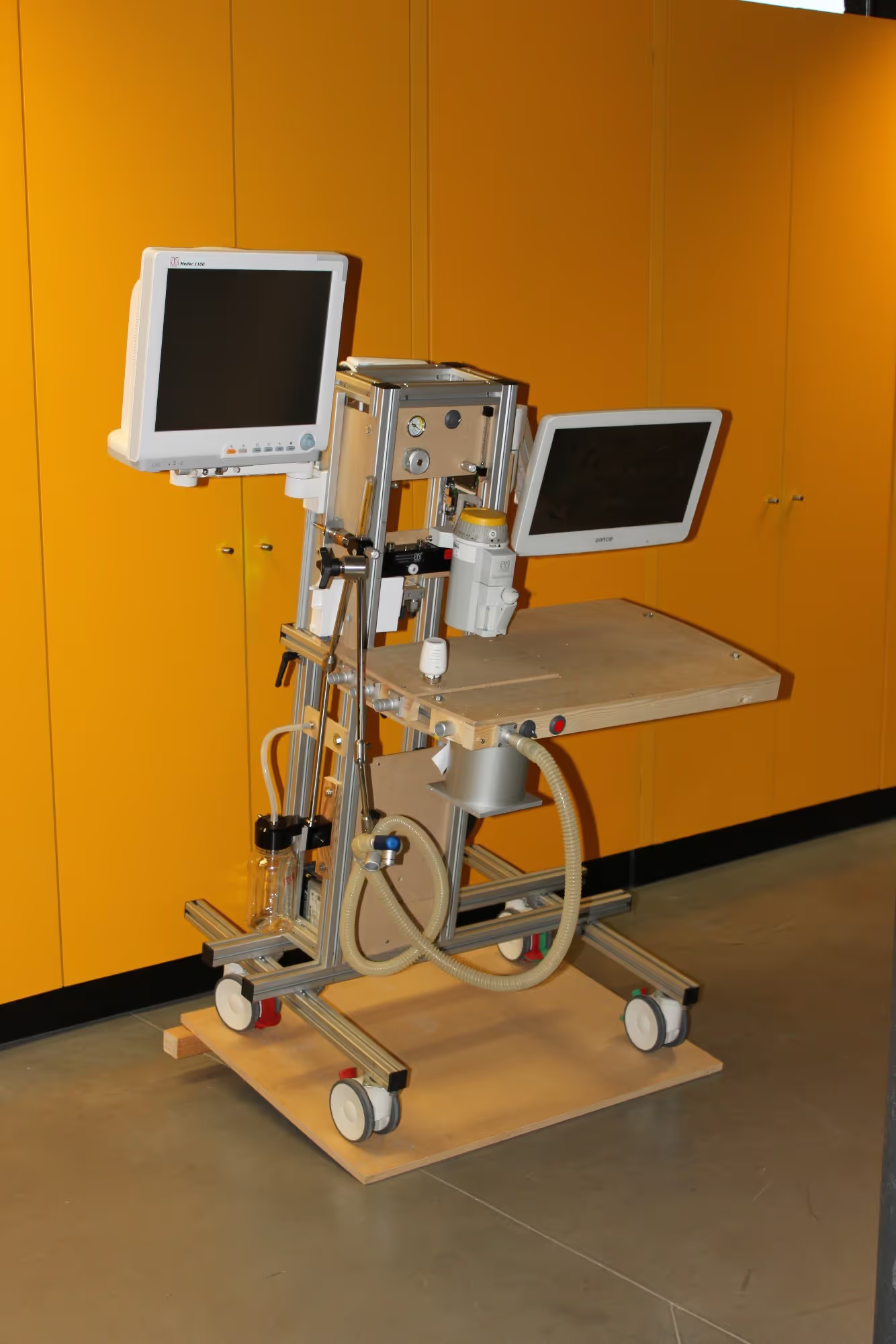
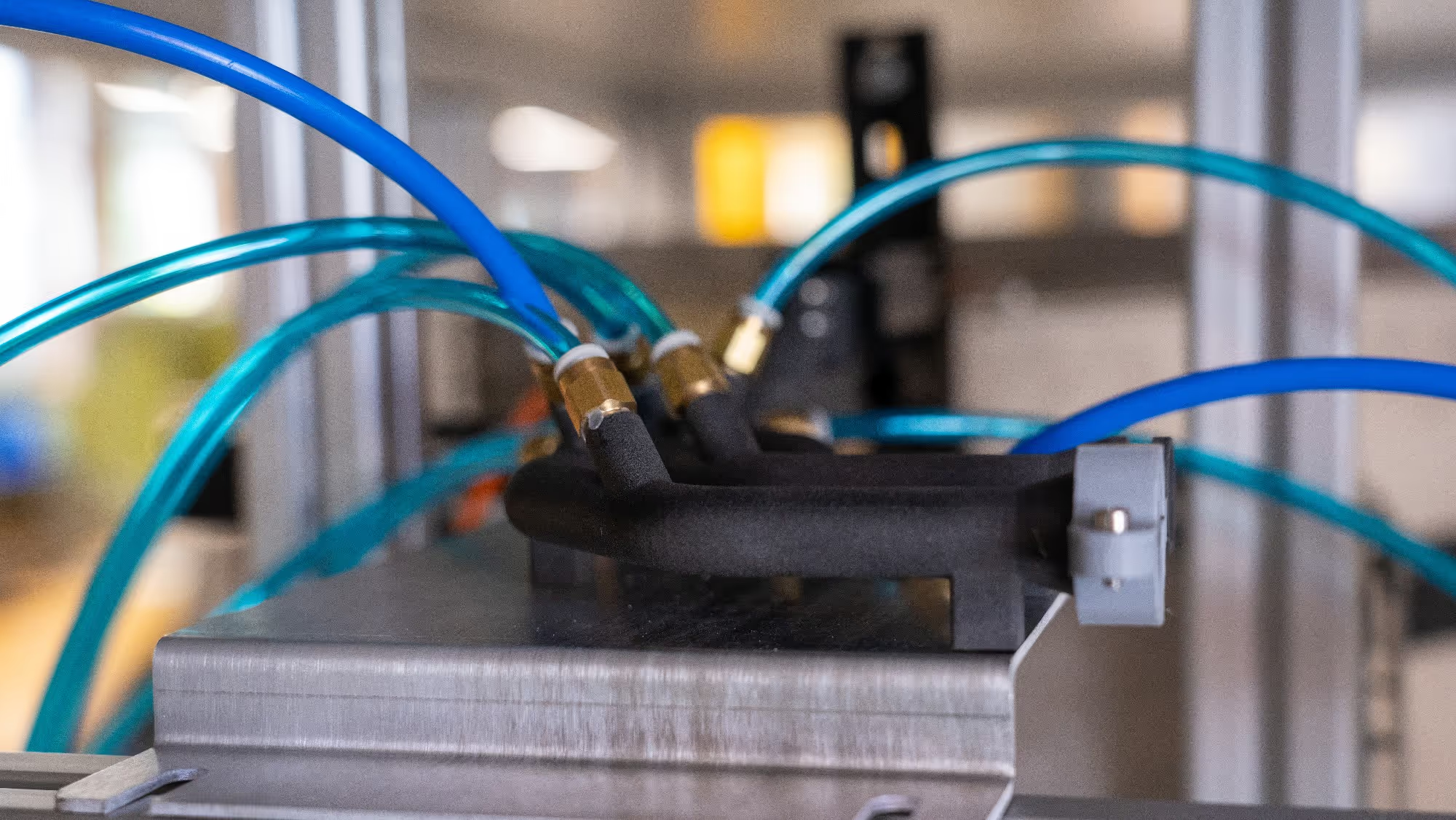
How do we build a prototype?
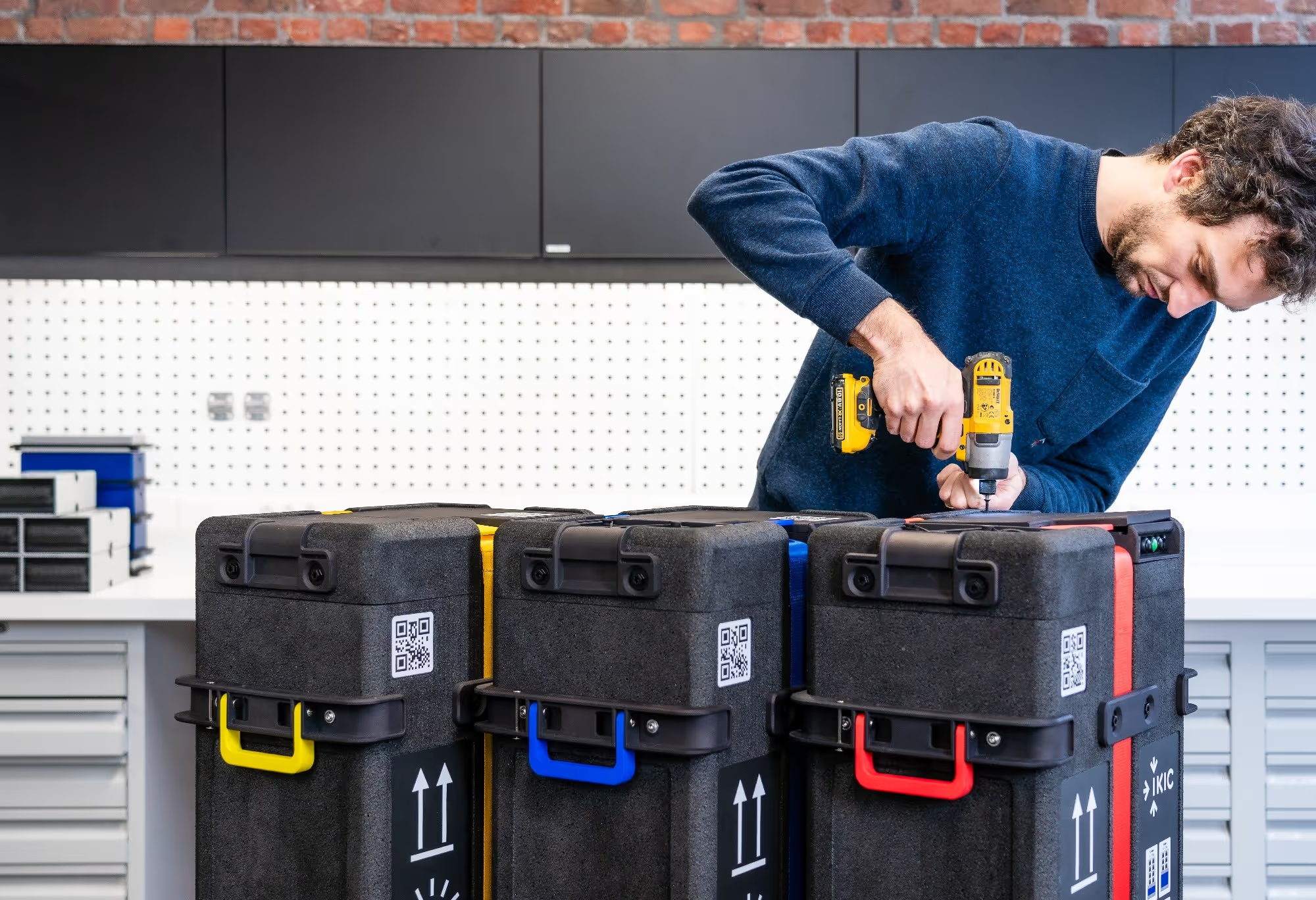
In our own prototyping workshop in Mechelen we combine several techniques. That means we can move fast: print a first model, test it, adjust it and print it again without waiting for external partners. The choice of technique depends on the type of product, the accuracy you need and what you want to learn from the prototype.
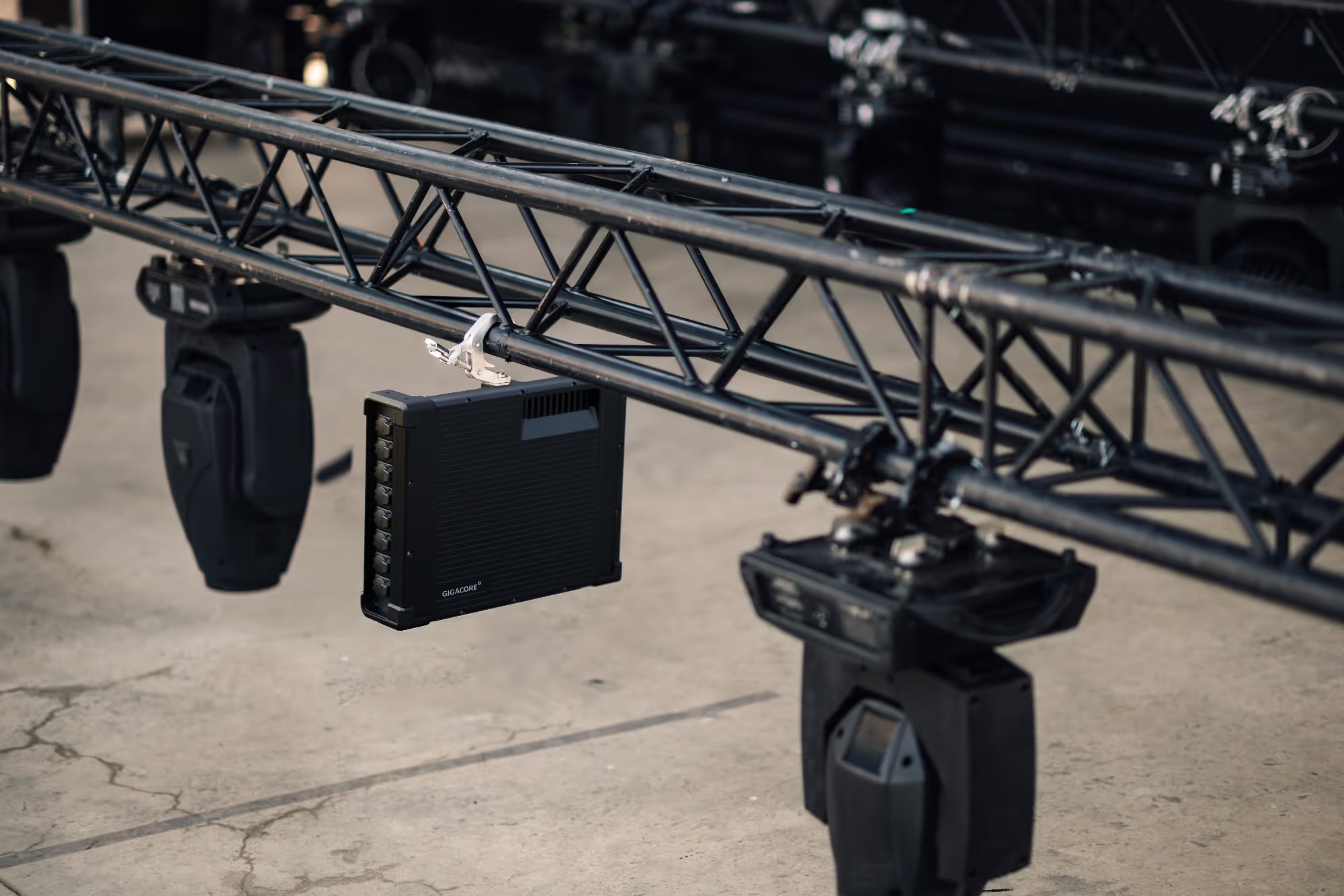
Case study: Luminex
From concept to production-ready prototype: how we helped Luminex validate their product.
This is the full story of a prototyping project at Superellipse: the client's question, the choices we made, the iterations we went through and the outcome. With photos, renders and concrete lessons.
What you get:
- The full course of the project, from briefing to production handover
- The specific challenges and how we solved them
- Concrete results and what the prototype proved
3D printing: the fastest way to a real model
3D printing is the technique we use most for prototyping. We print in our own workshop, which means a first model is sometimes ready within the day. That makes it the ideal technique for early iterations: build fast, test fast, adjust fast.
We work with several 3D printing techniques, each with its own strengths:
FDM (Fused Deposition Modeling) The most accessible technique. Suitable for quick concept models and rough functional tests. Lower precision, but fast and cheap. Ideal if you want to compare several variants side by side.
SLA (Stereolithography) Gives a smooth surface and high detail accuracy. Suitable for visual presentation models and prototypes where the finish matters, such as consumer products or medical devices. The material is a bit more brittle than with other techniques.
SLS (Selective Laser Sintering) Strong, functional and without support structures. Suitable for complex geometries and parts under mechanical load. The material (usually nylon) behaves close to a final product in plastic.
Besides 3D printing we also offer 3D design. Do you not have a CAD file yet? Our design team works out your sketch or idea into a print-ready 3D model.
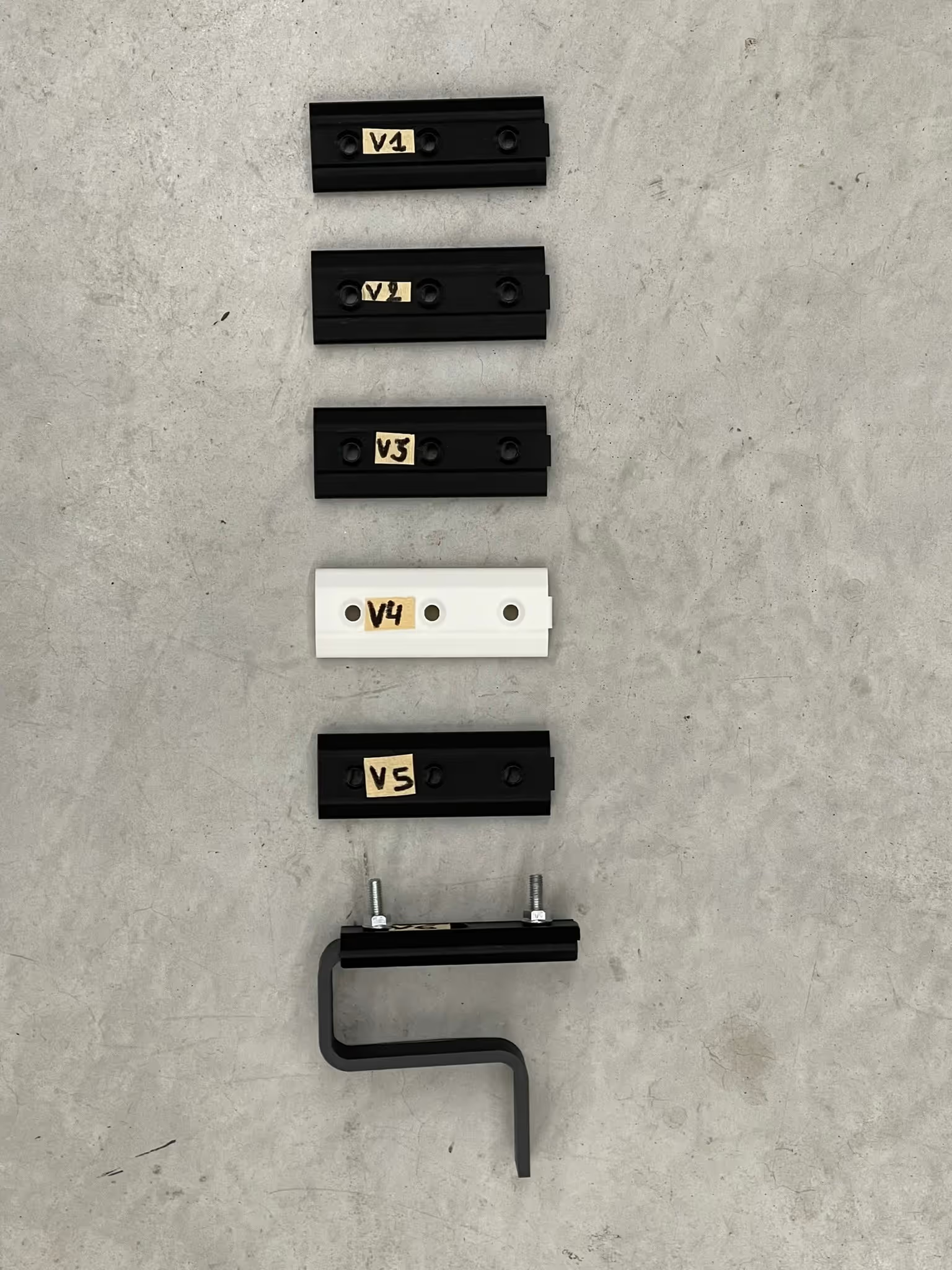
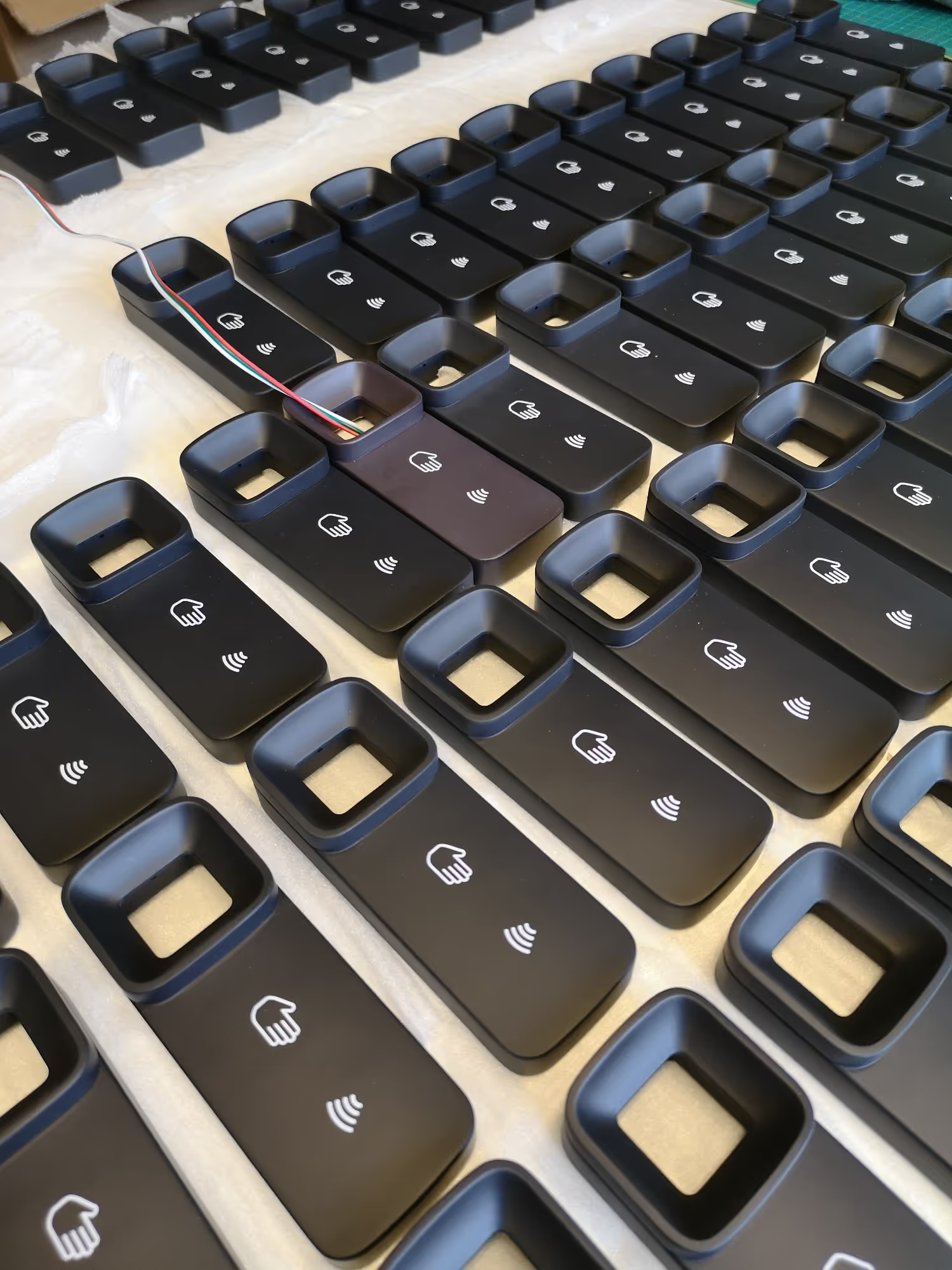
CNC milling and turning
For accurate parts in plastic or metal. Higher precision than 3D printing, suitable for functional prototypes with tight dimensional tolerances. Think of housings, mechanical components or parts that are tested under pressure or load.
Vacuum casting
Small series of plastic parts made from a silicone mould. Suitable when you need several identical prototypes for user tests or pilot projects. The parts look and feel like injection moulded plastic, but without the cost of a mould tool.
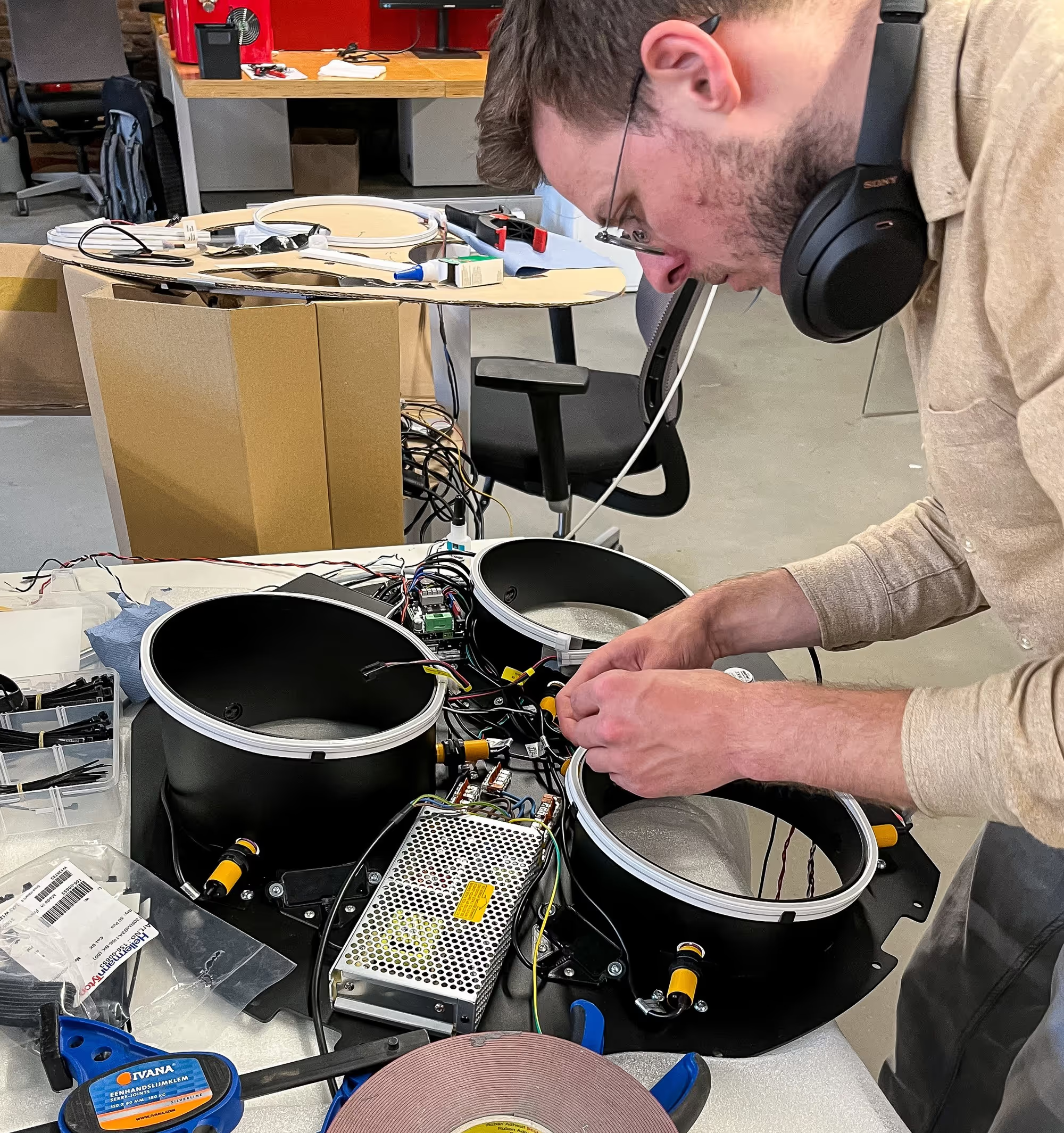
Electronics and PCB assembly
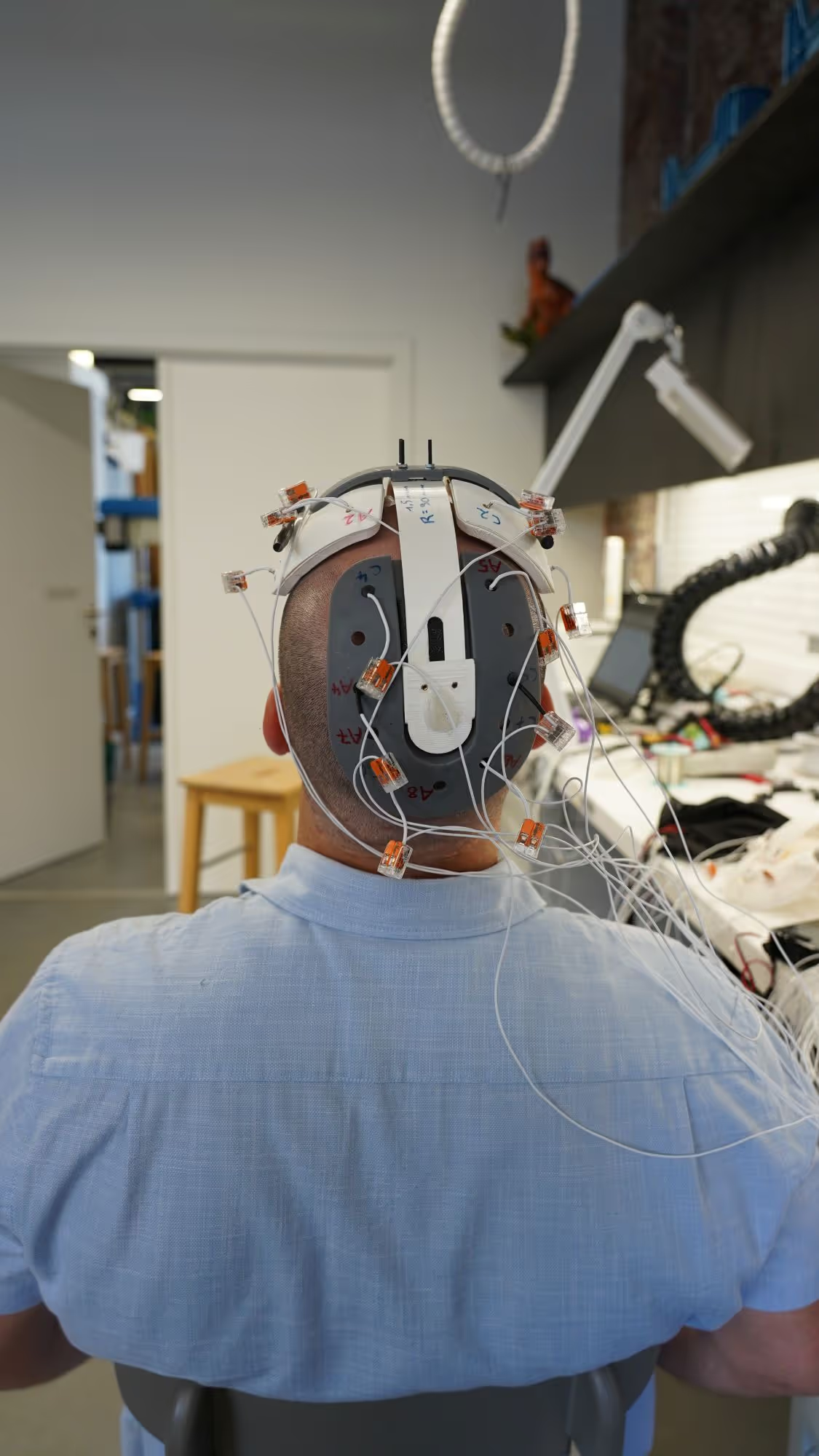
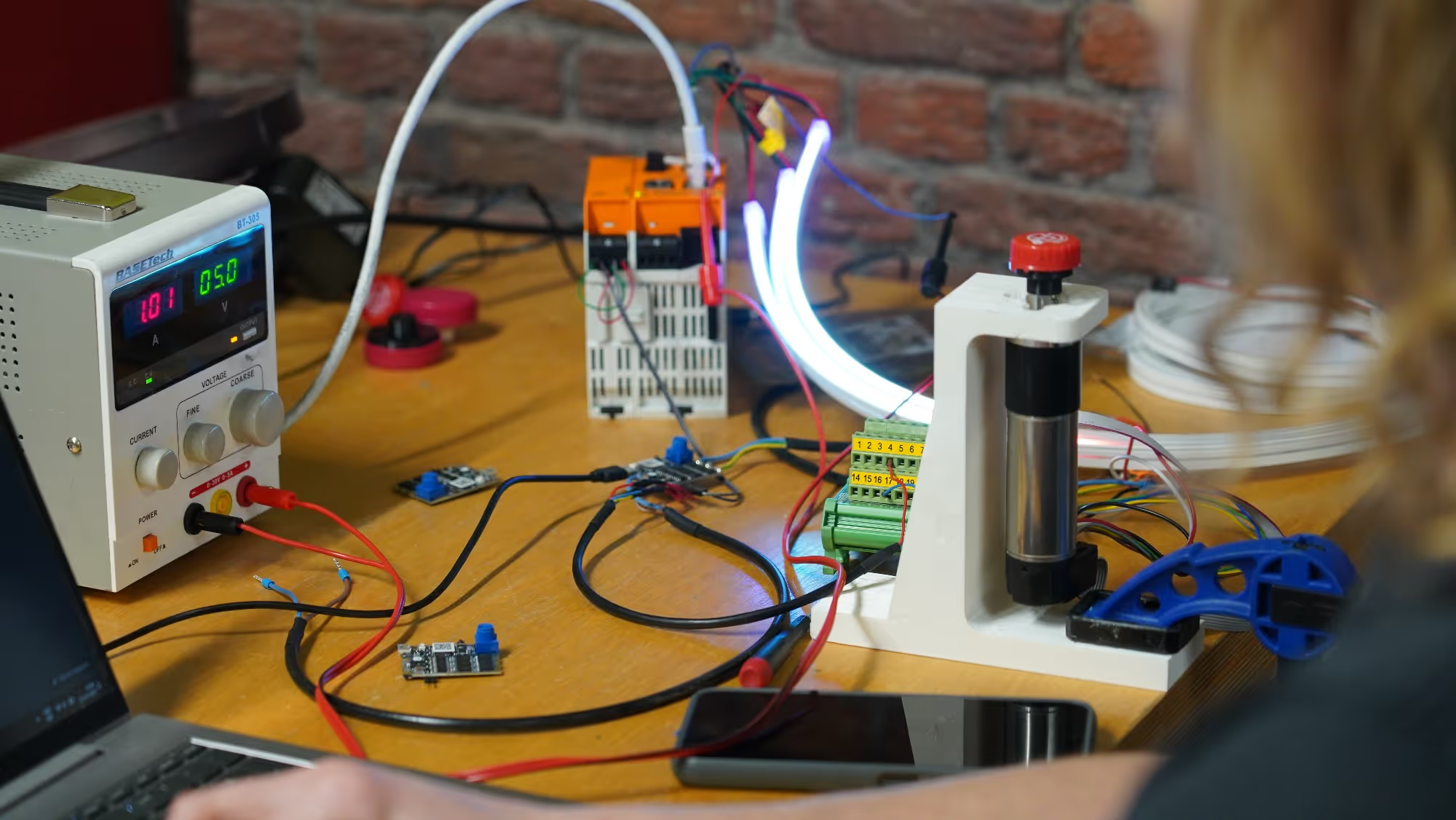
For connected devices, medical equipment and smart products. Our electronics team designs circuit boards and integrates all the electronics into the prototype. Hardware and software work together in one team, which speeds up integration and prevents miscommunication.
Manual assembly and finishing
Colour, material, finish (CMF). In our workshop we also work by hand: sanding, painting, assembling. So the prototype looks and feels like the final product, even though it is made with different techniques.
Test before you certify
Before a product goes to an accredited test lab for official certification, it pays to test in house first. Pre-compliance testing lets you find design faults early, so you do not run into surprises during the formal assessment.
Our prototyping facilities
We have a 300 m² prototyping and pilot production space where we provide everything for fast evaluation or production-ready parts:
- 3D-printers (FDM, SLA & SLS)
- Laser cutter
- Electronics lab
- Wood and metalworking tools
- Pre-compliance mechanical test equipment
- Climate chamber
- Tools for textile prototyping
- Spray booth
From day one, Superellipse's prototyping facilities were invaluable for the development of Moonbird. From the first models to the first series of functional devices for user tests.

Michael Broes
Founder of Moonbird

Ready to make your idea real?
Tell us about your project. Together we look at which type of prototype is right, which approach fits your timeline and budget, and how we can help.
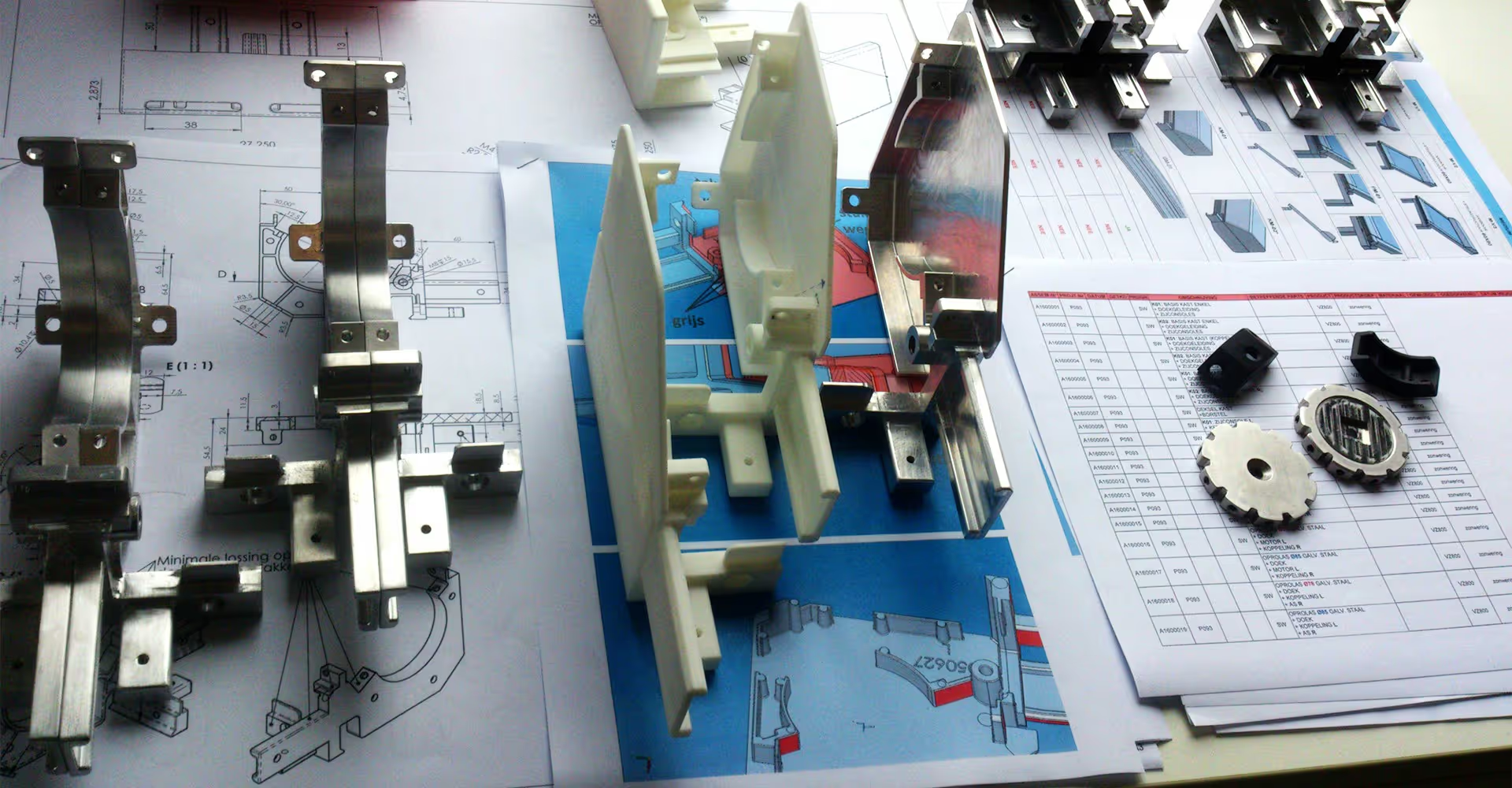
Prototyping starts with the right question
Building a prototype is fairly easy. Knowing what you want to test is the real challenge.
At Superellipse we start every prototyping project by taking a step back. What do you want to validate? Is this the right concept for the right audience? Which type of prototype gives you the most useful answer to your specific question? And what will you do with the outcome?
That critical view is in our DNA: think first, then design.
The result? We do not build prototypes that end up in a drawer. We build prototypes that prove or disprove something, and that bring the product closer to the market.
One team for the whole project
Industrial designers, mechanical engineers, electronics engineers and digital designers work together in one team. No handovers, no noise. What one team designs takes into account right away what the other team has to build.
Our own prototyping workshop
We build prototypes in our own workshop. No waiting for external partners for first models. Iterate fast, learn fast.
From prototype to production
We do not stop at the prototype. Superellipse also guides the step to production preparation: supplier selection, production method, mould or tooling choice, quality assurance. That way your product goes from testable model to market.
ISO 13485 certified
For medical devices and healthtech products we work in line with ISO 13485. Prototypes for this sector meet the requirements for CE marking and clinical validation.

Which companies do we build prototypes for?
We work for companies with a concrete product they want to test, validate or improve.
These are startups with a first concept they want to make tangible. But also established companies that want to renew an existing product. And R&D teams that want to validate a technical principle before they release a development budget.
We work for all industries, but over the past 30 years we have built up broad sector knowledge in healthcare and medtech, mobility, industry and professional equipment, consumer goods and sport.
Really liked the hands-on approach based on iterative design, test, learn and implement. Rather than theory-focused, this is refreshing and aligned with your expectations.
Jerome Labie
Coca-Cola Services
From prototype to production
A good prototype is a step along the way, not a destination.
Once the prototype is validated, the preparation for production begins. Which production method fits the volume? Which suppliers are the right fit? What has to change in the design to make it manufacturable in series? Which certifications are needed?
Superellipse guides this process from start to finish. We are not a production company that also designs. We are an innovation partner that oversees the whole process: from first sketch to production-ready design and supplier introduction.
That continuity is rare. And it stops knowledge from getting lost in the handover.
Superellipse is a great collaboration partner for design and engineering work. We have worked together with them on multiple projects where they were responsible for device design and prototyping work for medical related produces. Their engineers are highly skilled not only on CAD prototyping but also on everything from fluid mechanics to signal processing and medical insights. There are also good resources for UX and consumer design related areas and evaluation of manufacturability of prototypes. It has always been a pleasure working with Superellipse both with their friendly and can-do attitude and their proactive working style and we will definitely like to continue working with them.

Adam Bohr
CEO and Co-Founder of Sonohaler
Still have questions about prototyping?
Book a free call with Tim, team lead product design and engineering
Frequently asked questions about having a prototype made
The cost of a prototype varies a lot. A simple visual model made with 3D printing can already be made for a few hundred euros. A fully functional prototype with electronics, software and finishing can run into tens of thousands of euros. What determines the price: the type of prototype, the techniques and materials used, the dimensions, the complexity of the design, and the number of iterations. We always give a clear quote before we start.
For a first simple 3D printed model: a few days. For a fully functional prototype with electronics and software: usually four to twelve weeks, depending on the complexity. We work with clear milestones so you know where you stand at any moment.
A proof of concept (POC) proves that a technical principle works. It rarely looks like the final product. A prototype goes a step further: it simulates how the product looks, feels or works for the end user. In practice they sometimes overlap, but the goal is always different.
An MVP (minimum viable product) is a version of your product that you already bring to market to collect feedback from real users. A prototype is internal: you test it yourself, with your team or with a selected test group, before you go public. An MVP usually follows after one or more rounds of prototyping.
Not necessarily. We often start from a sketch, an idea or an existing product that needs improving. Our team helps you work out the concept and turn it into a briefing for the prototype. The more you already have, the faster we can start. But a blank sheet is a starting point too.
Ideally you provide a 3D CAD file. But we also work from sketches, reference images or a description. Our design team can work out the design for you or refine it further.
Yes. We build not only physical prototypes, but also digital interfaces, interactive simulations and hybrid products in which hardware and software work together. Examples include connected devices, medical devices with a screen, or industrial tools with a digital control interface.
Yes. We work for companies of all sizes. Startups often bring a concrete idea and want to validate it fast. Established companies bring an existing product and want to improve or extend it. The approach differs, the goal does not: a prototype that proves something.
That is exactly the point. A prototype that disproves something is just as valuable as one that proves something. Together we analyse why it did not work, what that means for the concept, and how we adjust it. Iteration is not failure. It is the method.
For most prototyping techniques we work in our own workshop: FDM, SLA and SLS 3D printing, manual assembly and finishing. That makes fast iteration possible without waiting times. For specific materials, large volumes or specialised techniques we work with a network of selected partners. We coordinate that ourselves, so you have one point of contact.
Yes. If you do not have a 3D file yet, our design team turns your sketch, reference images or description into a print-ready 3D model. We combine industrial design and engineering so the model is not only good looking, but also manufacturable.
We work under confidentiality as standard. On request we sign an NDA before the first conversation. Your intellectual property stays yours.
Ready to innovate?
Reach out today and let us help you propel your business with bold human-centric design