From arrival to exit, without the guesswork
The problem
Ask a driver about the Antwerp Euroterminal (AET) and you might notice that waiting time at AET could be reduced. It can take a while to get onto the car park. Another waiting session at the check-in desk. Again behind the barrier. Twenty minutes of actual unloading, then another wait for a surveyor to sign off. Nobody tells you why, or how long.
Behind the desk, the crew spent their days working hard to put out fires. Every incident had, over time, earned its own rule or extra check in the operational processes. Understandable, but the result was a standard flow built around the exceptions. Slow for the many, to catch the few.
Surveyors followed a task list sorted by arrival time and regularly turned up where nothing had been unloaded yet.
Damage forms, stickers, parking sheets: all paper. And transport companies got little info until their driver got home with the documents.
The brief, and the question behind it
AET came to us with a concrete idea: guide drivers across the terminal using geolocation. A fair solution. But nobody had mapped out what drivers, crew and transporters actually needed.
So we proposed to widen the scope first and look at the whole journey, from arrival to exit. AET’s management agreed, and that decision shaped everything that followed.
How we worked
Four months, three phases. Journey mapping with AET’s team. Then two days on the terminal: shadowing desk staff, surveyors, car checkers and the colleague who tracks down lost cars, and rides with drivers.
Finally, a survey at a pop-up stand in the waiting room.
That survey needed one deliberate choice. A third of drivers speak no Dutch, French or English, and the ones who do often struggle with terminal jargon. Their frustration simply never reached the office in words. So we translated the survey into ten languages and stripped out difficult terms.
Drivers who had been grumbling in the queue lit up and talked.
For the first time, their side of the story landed on the table in full.
The data drew a sharp line. Frequent visitors know the terminal inside out and want to skip the desk, not queue behind newcomers. Sporadic visitors need a hand, in their own language.
Two principles followed. Design for the majority, not the exception. And never leave a driver guessing why they’re waiting.
What came out
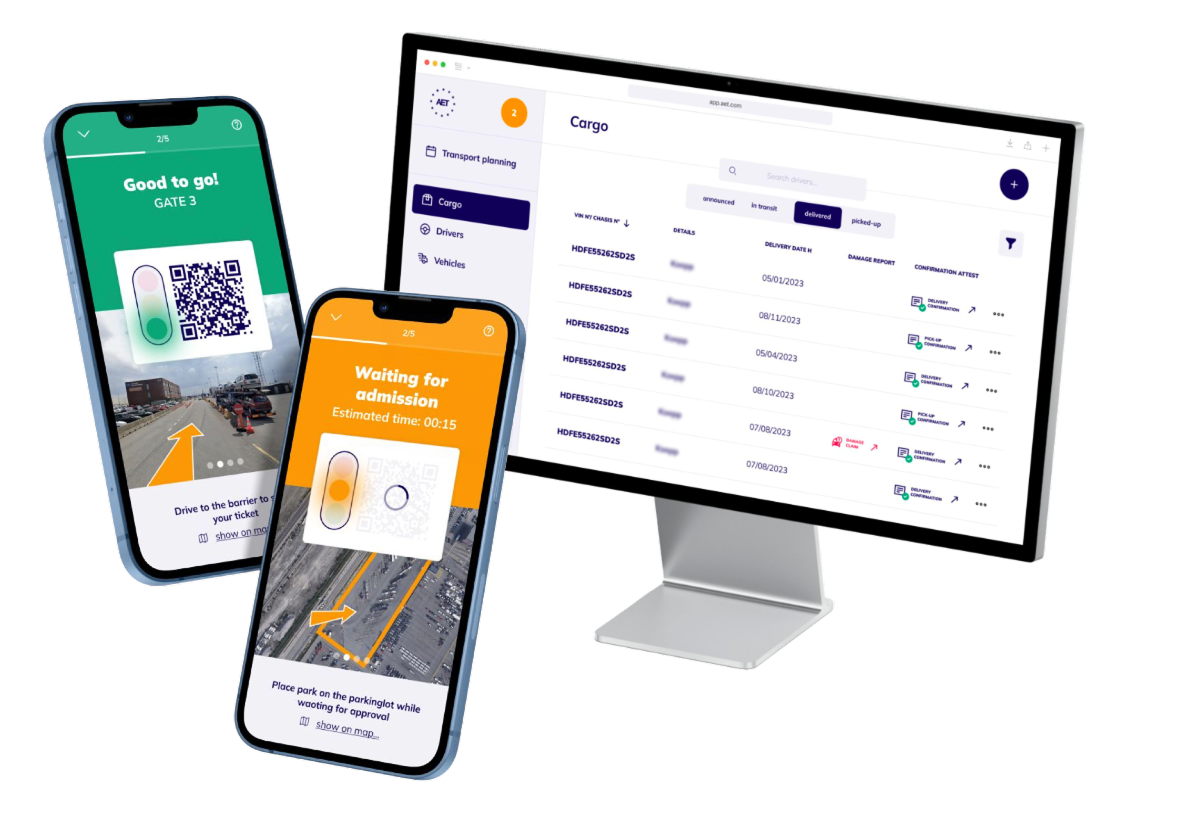
A redesigned journey, touchpoint by touchpoint, from wayfinding to digital tools. For frequent visitors: a fast lane. Transport companies can announce trips beforehand in a portal and receive documents digitally. The driver shares an ETA in the app, sees a busyness forecast, passes a short safety quiz before first use, and the gate opens on licence plate recognition. One tap after unloading puts them on the surveyor’s list.
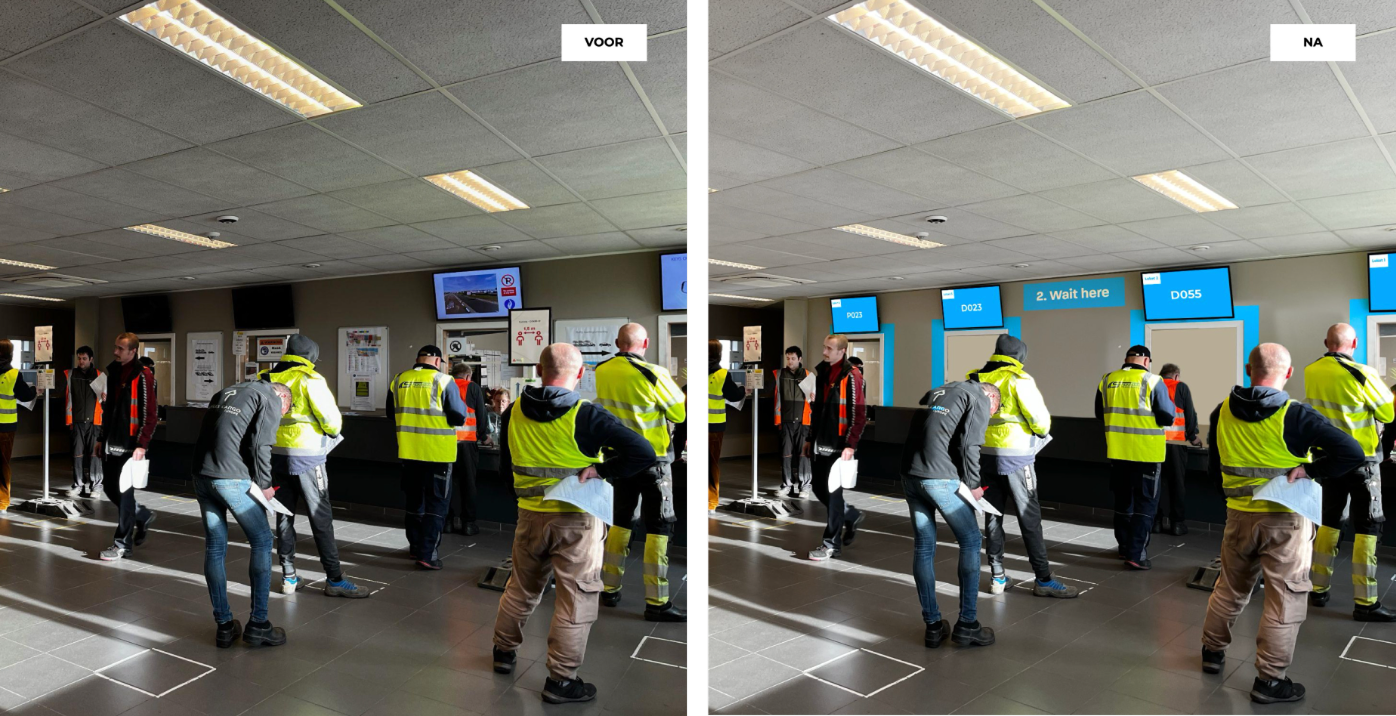
For sporadic visitors: proper guidance. Multilingual touchscreens that route them to the right counter, a starter guide in their own language, a paper ticket for those who prefer it, and clearer wayfinding.
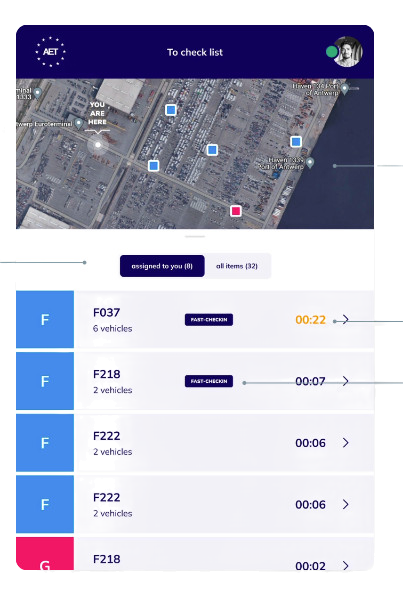
For the crew: a smart surveyor checklist that plans routes around actual unloading times, and a dashboard showing who’s coming when, so staffing can follow the forecast.
AET now holds a validated concept, visualised screen by screen, ready for technical estimation and a build roadmap. And a flow that frees the office from solving frequent issues on the spot, every day, so that time can go into making change happen.
Let's talk
Reach out today and let us help you propel your business with bold human-centric design